 1 / 3
Kiwi Park Queenstown
📍 Queenstown, Otago
Is this your venue? Claim this listing →
Meet kiwi in a specially designed nocturnal house, discover native birds and reptiles, and enjoy live conservation shows at this family-run Queenstown wildlife sanctuary. Explore at your own pace with a free self-guided audio tour.
🏆 Family Action Verdict
A welcome change of pace from Queenstown's adrenaline-filled attractions. The chance to see kiwi and learn about New Zealand's native wildlife makes this a rewarding family experience, with the conservation shows adding an entertaining, educational element. Best suited to families who enjoy animals and exploring at a relaxed pace.
ℹ️ What to Know Before You Go
💬 What Families Are Saying
View all reviews →2,117 Google reviews
G Reviews from Google
Jessica Peters
2 months ago
“Absolutely loved my experience at Kiwi Park! I would recommend to anyone wanting to learn about native New Zealand wildlife and support a great cause. I saw plenty of Kiwi and other native NZ birds/animals. I attended the 3pm conservation show and the presenter was incredibly knowledgeable and informative. The show was very interesting! After the show, I walked over to my booked Kiwi encounter at 3:45pm which was great also! I am usually worried about the small spaces of animals in exhibits, but it seemed the wildlife conservationists at Kiwi Park are very well educated and provide a high quality enclosure for the animals displayed in the exhibits. I finished my 2 hours in Kiwi Park with a free honey tasting - but did not buy any as I did not want to bring NZ honey into Australia and risk the health of Australian bees. The entry ticket into Kiwi Park funds/supports their conservation efforts. Overall, I had a great time and I’m super happy with my experience here!”
Yarni MacAlister
a month ago
“What a fantastic activity to do in Queenstown! We loved the Kiwi Park, The grounds have been landscape beautifully and the Bird enclosures are excellent. It was so fantastic to see the Kiwi up close! The conservation show was great and it really feels that animal welfare is at the forefront. It’s not overly large so an easy walk around and you can enter some of the bird enclosures for an up close encounter. We were so glad that we did this, it was a highlight of our Queenstown trip!”
Robert C
9 months ago
“Top notch experience in Queenstown. Super knowledgeable staff, an excellent array of native and endemic birds and wildlife, and a great way to spend a morning in QN. It was super chill at the onset of opening and we would suggest visiting earlier in the day if possible to get the place mostly to yourself. The inside kiwi houses are a wonderful way to see the elusive bird up close and personal and is a vital part of a national conservation effort to restore the populations.”
📊 Commonly mentioned in Google reviews
Based on Google review tagsKiwi viewing
285 reviews
Kiwis
159 reviews
Conservation show
129 reviews
Endangered species
40 reviews
Tuatara
38 reviews
Overview
Tucked into five acres of landscaped native bush just below the Skyline Gondola, Kiwi Park gives families a chance to discover New Zealand's remarkable wildlife in the heart of Queenstown.
The main attraction is the Kiwi Encounter, where visitors step into a specially designed nocturnal house to watch New Zealand's iconic flightless bird, while the park's wildlife experts explain the birds' behaviour and the work being done to breed and release kiwi back into the wild.
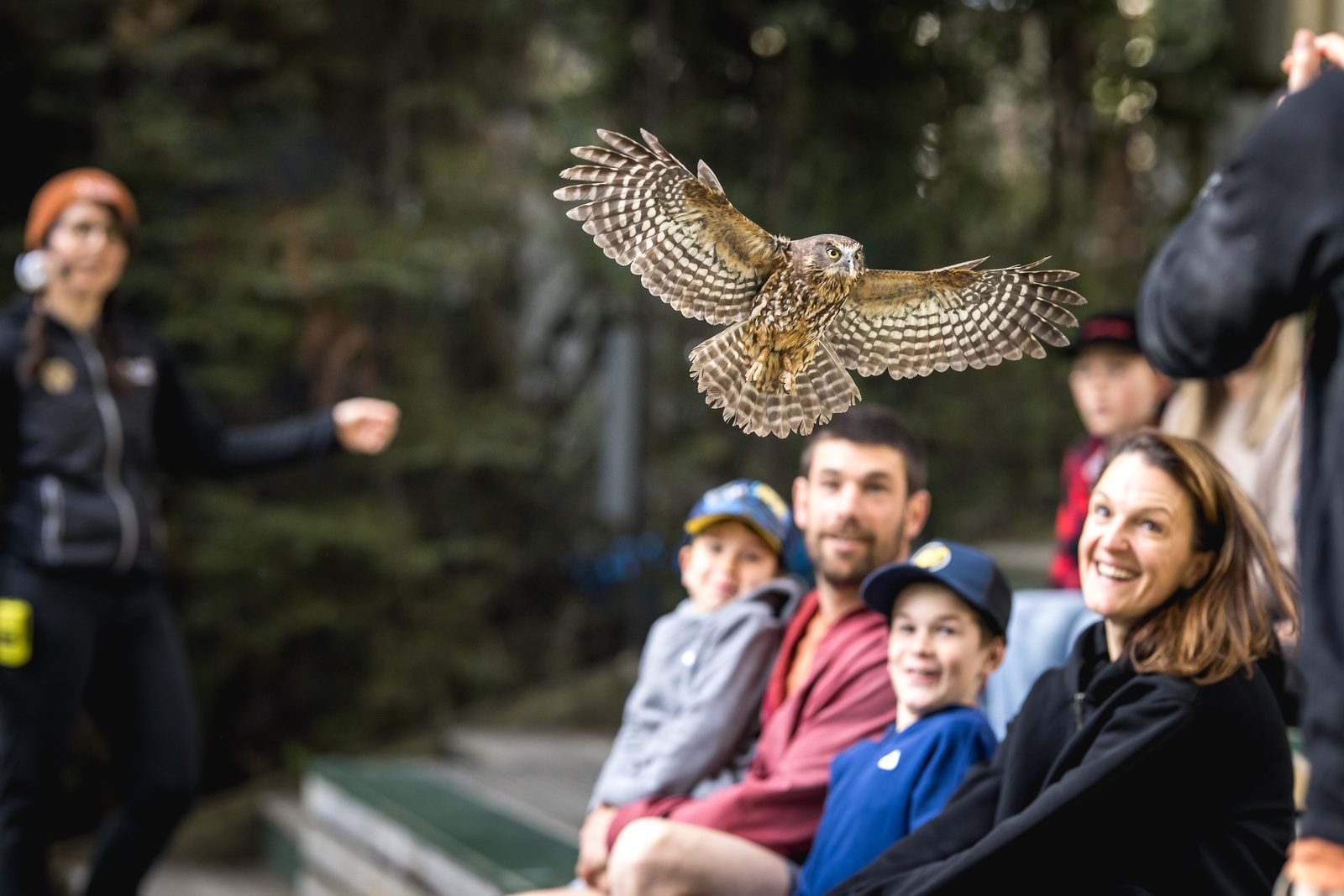
Beyond the kiwi house, families can explore habitats holding more than 20 native species, including kea and tuatara. Daily conservation shows bring some of these animals into focus: a 30-minute free-flight show that mixes live demonstrations with the stories of what New Zealand's wildlife is up against.
There is also a Honey Bee Centre with a see-through hive and a complimentary honey tasting, and a free self-guided audio tour on the park's app, in several languages, lets families wander at their own pace.
Family-owned and run since 1986 on what was once a rubbish tip, Kiwi Park works with the Department of Conservation on managed breeding and release programmes, and all of its conservation work is funded by visitors, donations and souvenir sales, so every visit helps.